If you — or you’re helping a parent or grandparent — have ever tried to figure out what benefits are available in your ZIP code and at what age you can get them, I understand. It’s not always straightforward. 👇Click below to jump straight to the right place and check.
“Wait… am I officially a senior now?” You’re not alone if you’ve ever wondered.
It happened to Bradley on a Tuesday morning.
👋 Hello there — Bradley here.
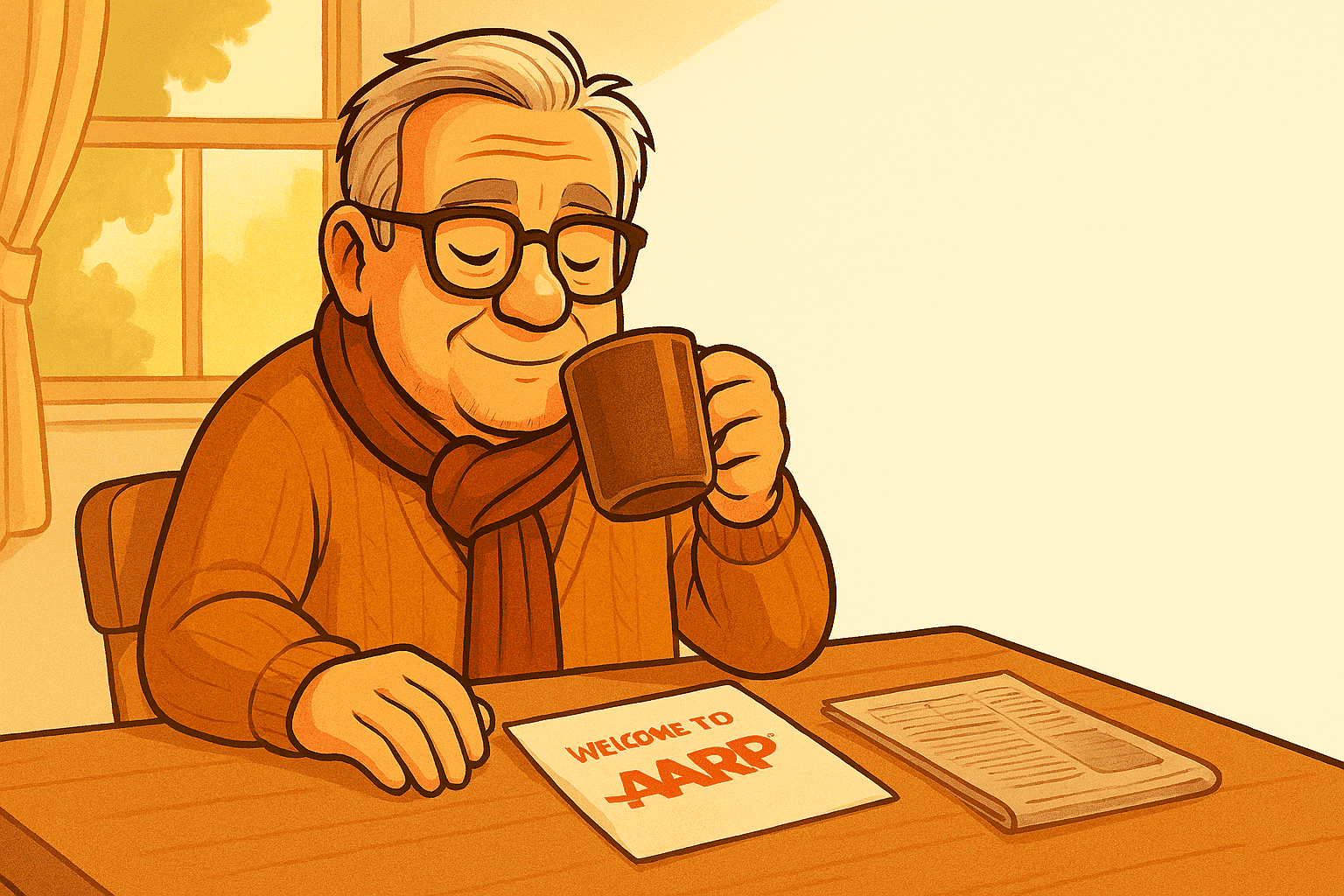
He was sitting at his kitchen table, sipping his usual black coffee. The morning sun stretched across the counter, warming the folded newspaper and a small envelope sitting quietly beside it.
He opened it lazily.
“Welcome to AARP.”
He smiled.
Then he paused.
Was this the answer to a question he never thought to ask—how old is a senior citizen?
Was this it?
The official moment he crossed into “senior citizen” territory?
So… What Age Is a Senior Citizen, Really?
Ask ten different people, and you’ll get ten different answers.
But here’s what Bradley had learned through years of watching friends, neighbors—and now himself—slide gracefully into the role:
| Age | What It Usually Means |
| 50 | AARP starts sending you mail. Early membership, early discounts. |
| 55 | Retirement communities open their doors. Active adult living, here we come. |
| 60 | Movie theaters, grocery stores, and diners often start offering senior discounts. |
| 62 | You can start claiming early Social Security benefits. |
| 65 | Hello, Medicare! The health benefits kick in. |
| 67 | Full retirement age for most born after 1960. Maximum Social Security. |
But here’s the twist: no one tells you exactly when you become a “senior.” There’s no announcement, no ceremony. Just… hints.
A flyer in the mail.
An unexpected discount at the pharmacy.
A young cashier asking, “Would you like the senior price?”
👉 Curious why the age varies so much between programs, communities, and benefits?
Read our full breakdown of senior citizen age and definitions here →
When Senior Status Becomes Real: Little Moments That Tell You You’ve Qualified
For Bradley, it wasn’t the birthday cake with “65” candles. It wasn’t the Medicare paperwork.
It was that letter on a Tuesday. Followed a week later by his grandson saying:
“Grandpa, do you know what TikTok is?”
Suddenly, the signs were everywhere:
- His knees made more noise than the floorboards.
- He started using the phrase “back in my day” without irony.
- A 40-year-old called him “sir”… and meant it.
And yet—he didn’t feel old. He felt… like himself. Just with better socks and earlier bedtimes.
What Qualifies Someone as a Senior Citizen? It Depends on the Context
Here’s why things get fuzzy:
- Retailers set discount ages based on customer loyalty—often 60, sometimes even 55.
- Government programs like Medicare or Social Security use their own rules: 62, 65, 67.
- Housing communities have rules starting at 55+, focused more on lifestyle than age.
- Some people don’t consider themselves “senior” until they’re 70+, or until they need help getting out of a chair (Bradley included).
It’s not about one magic number.
It’s about the roles we step into gradually—helper, storyteller, quiet observer, gentle guide.
👉 Want a detailed breakdown of each age and its meaning across programs?
Read our full senior citizen age guide here →
Defining Senior Citizenship: It’s Not Just About Age, It’s About the Feeling
There’s no buzzer that goes off.
No hat with “Senior Now” stitched across the front (though Bradley wouldn’t mind the embroidery).
It just… arrives. And when it does, it comes with more than discounts and benefits. It brings space. Time. A little peace. A good story or two.
So how old is a senior citizen?
Bradley says:
“Old enough to know when to laugh at yourself.
And young enough to enjoy it.”
Benefits of Senior Life from Barley: Start This Chapter with a Smile (Even at Age 50)
If you’re just crossing into this “senior” phase—or walking alongside someone who is—there’s a way to make it feel lighter.
🧡 Check out these heartwarming short stories for seniors →
No tiny fonts. No long chapters.
Just a warm cup of comfort in story form.
Because getting older isn’t about endings—it’s about how you tell the next part.
FAQ About Senior Citizen Age
Turning 60—or even as early as age 50—leaves many people wondering:
“When exactly am I considered a senior?”
That answer depends on what you’re looking at—healthcare, discounts, retirement, or community services. Different programs and benefits have different age requirements, and your senior status may begin at 55, 60, 62, or around age 65.
In the FAQs below, we break down common questions about the age range, what it means to be a senior, and when someone is considered a senior citizen in the U.S.
What Age Qualifies as a Senior Citizen in the U.S.?
Most people are considered a senior citizen by age 65, especially when it comes to government programs like Medicare. However, many benefits start earlier—AARP accepts members at 50, some retirement communities begin at 55, and senior discounts often start at 60.
What Is the Typical Senior Citizen Age for Health Insurance and Benefits?
The most common milestone is 65, which qualifies you for senior health insurance under Medicare. That said, many seniors begin receiving benefits earlier through Social Security or community-based programs at age 62.
What Age Is Considered Senior for Housing and Living Communities?
In the U.S., many senior living communities and senior centers begin welcoming residents at age 55. These communities often offer independent or assisted living options tailored to senior health, lifestyle, and social connection.
Does Everyone Become a Senior Citizen at the Same Age?
Not necessarily. There’s no fixed age threshold. Your senior status may be defined differently depending on whether you’re looking at retirement age, healthcare eligibility, senior discounts, or living communities. It’s more about context than a single number.
What Are the Benefits of Becoming a Senior Citizen?
Common senior citizen benefits include access to Medicare, Social Security, prescription discounts, tax breaks, and specialized senior living services. Some also enjoy community perks like fitness programs, transit support, and senior centers.
What is the average rent for senior citizens in the U.S.?
Many older adults struggle with rising housing costs. See the latest data on what seniors are paying for rent.