
Rent is one of the biggest expenses for older adults. For Americans age 65 and over, understanding how much is spent on rent each year—and how that compares with income and other housing data—offers a clear picture of financial realities in retirement.
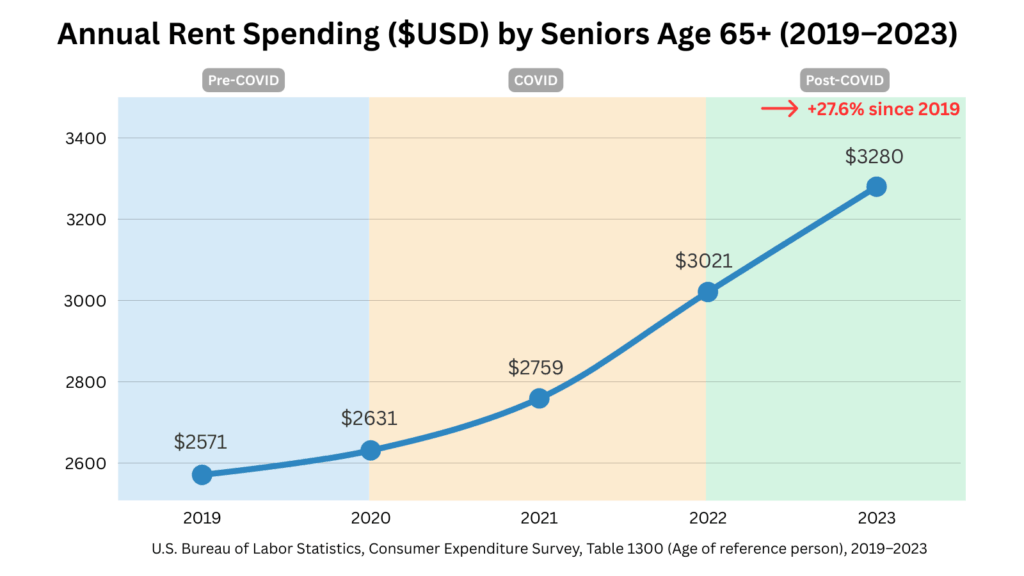
Annual Rent Spending by Seniors Age 65+ (2019–2023)
According to the U.S. Bureau of Labor Statistics (BLS) Consumer Expenditure Survey, Table 1300 from 2019-2023.
| 2019 | 2020 | 2021 | 2022 | 2023 |
| $2571 | $2631 | $2759 | $3021 | $3280 |
Income Trends of Seniors Age 65+ (2019–2023)
Understanding how much seniors earn is just as important as knowing what they spend. According to the U.S. Bureau of Labor Statistics (BLS) Consumer Expenditure Survey, income levels for Americans age 65 and older have shifted noticeably from 2019 through 2023.
Looking at both before-tax and after-tax income provides insight into how well older adults can keep up with rising housing costs—and whether their financial resources are keeping pace with the growing burden of rent and other expenses.
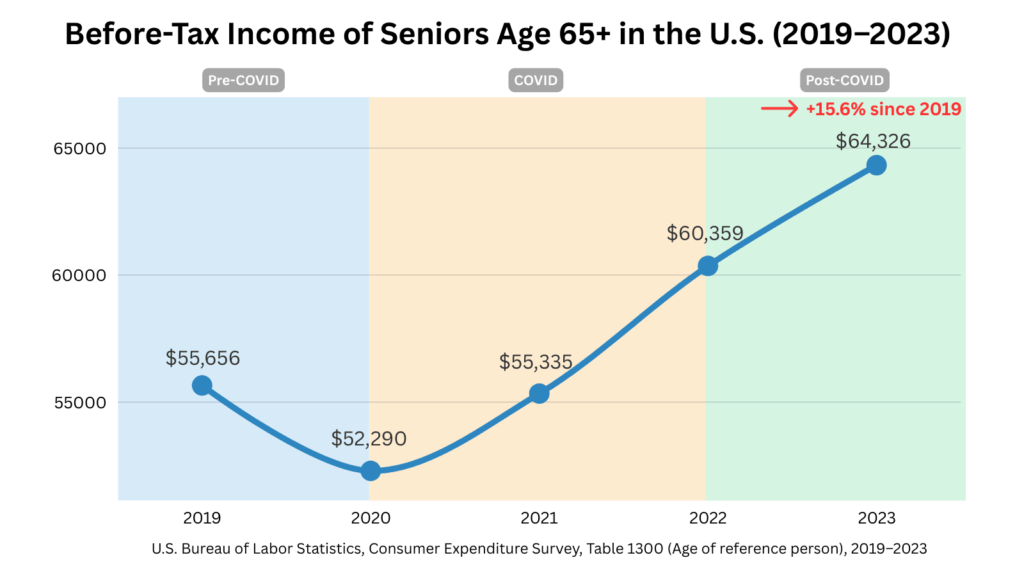
Before-Tax Income of Seniors 65+ (2019–2023)
According to BLS Consumer Expenditure Survey (Table 1300), the before-tax income of seniors age 65 and over fluctuated between 2019 and 2023.
| 2019 | 2020 | 2021 | 2022 | 2023 |
| $55,656 | $52,290 | $55,335 | $60,359 | $64,326 |
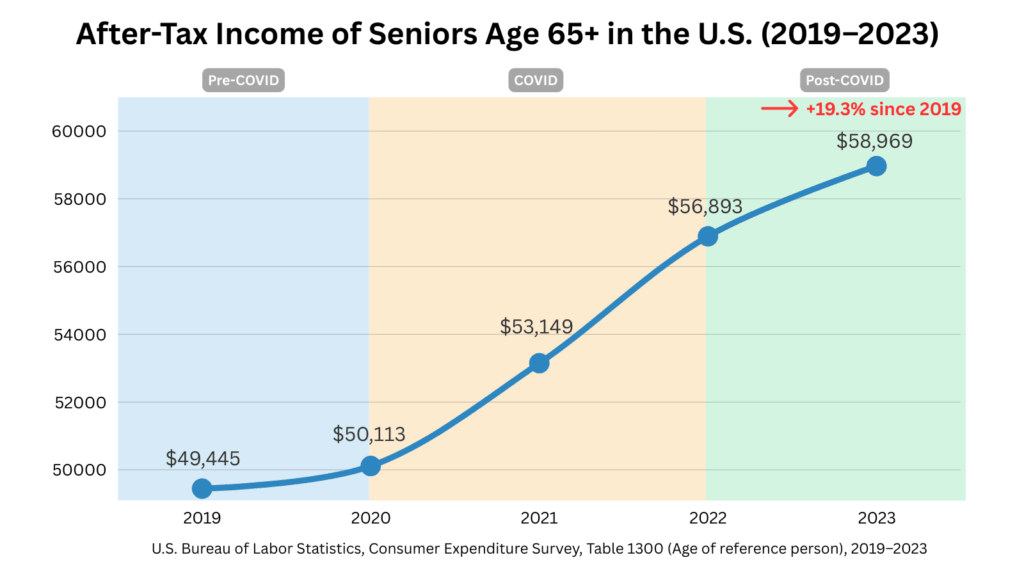
After-Tax (disposable income) Income of Seniors 65+ (2019–2023)
According to the BLS Consumer Expenditure Survey (Table 1300), the after-tax or disposable income of seniors age 65 and over steadily increased from 2019 to 2023.
| 2019 | 2020 | 2021 | 2022 | 2023 |
| $49,445 | $50,113 | $53,149 | $56,893 | $58,969 |
Conclusion under Income Trends of Seniors Age 65+ (2019–2023)
From 2019 to 2023, seniors’ incomes grew on both a before-tax and after-tax basis. Before-tax income dipped during the COVID period—falling from $55,656 in 2019 to $52,290 in 2020—before recovering and reaching $64,326 in 2023.
After-tax income, however, showed no such dip, instead rising steadily from $49,445 in 2019 to $58,969 in 2023, suggesting that tax policies and relief measures may have softened the blow of the pandemic for older adults.
Even so, when compared with a 27.6% rise in annual rent spending over the same period, the overall picture points to a persistent affordability gap: seniors’ housing costs are increasing faster than their incomes.
Housing Costs Beyond Rent: Seniors with Owned Homes (Mortgages, Utilities, Property Taxes, and Maintenance)
Not all older adults rent their homes. Many seniors own a house or apartment, but that doesn’t mean they live without housing costs. For these homeowners, the financial burden shows up in different ways—mortgage payments for those still carrying debt, rising utility bills, property taxes, and the ongoing expense of home maintenance.
These costs may be less visible than monthly rent, but they weigh heavily on household budgets and play a central role in shaping the financial security of seniors after 65.
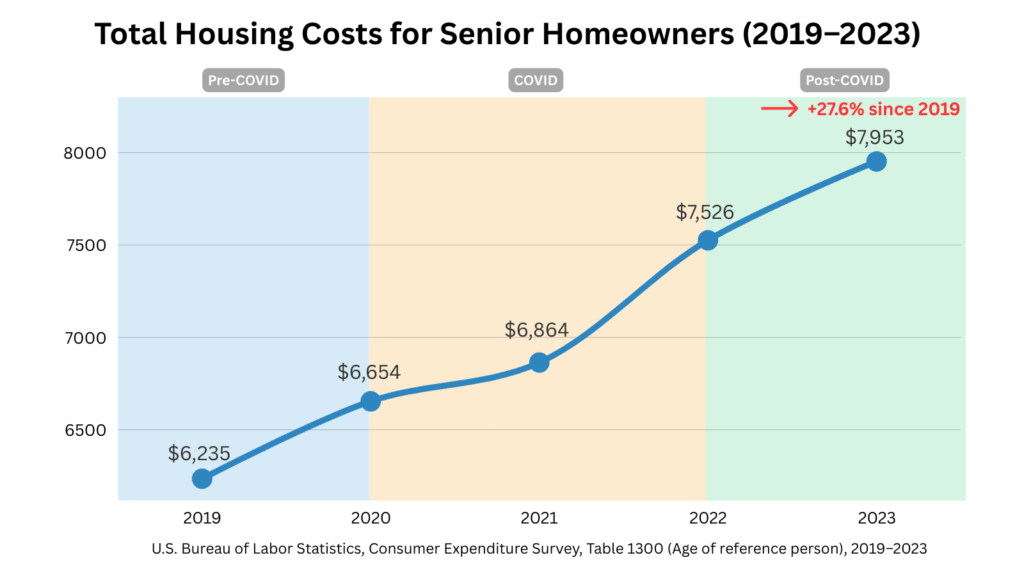
Total Housing Costs for Senior Homeowners (2019–2023)
According to the BLS Consumer Expenditure Survey (Table 1300), total annual housing costs for senior homeowners age 65 and over remained a significant expense from 2019 through 2023.
| 2019 | 2020 | 2021 | 2022 | 2023 |
| $6,235 | $6,654 | $6,864 | $7,526 | $7,953 |
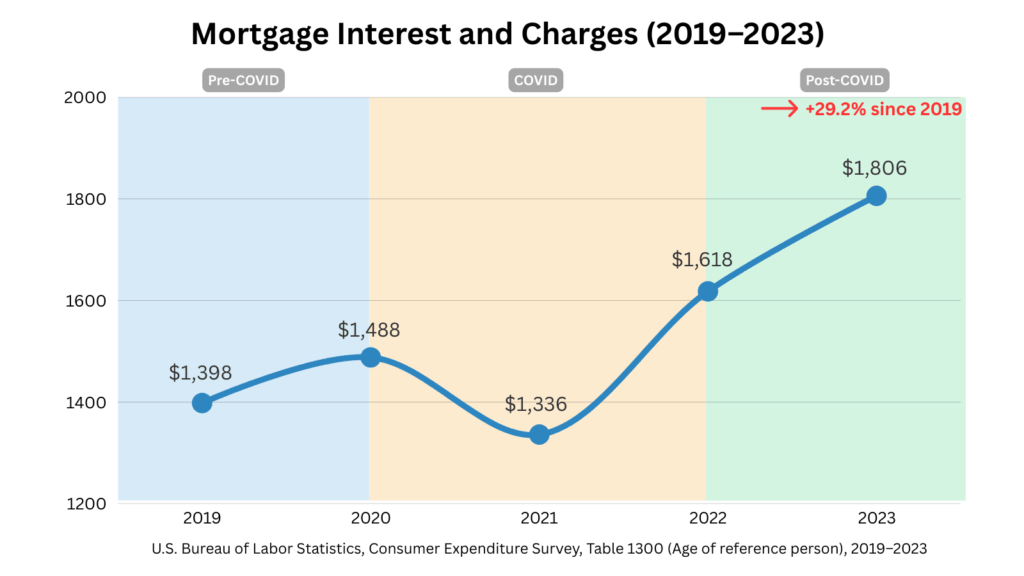
Mortgage Interest and Charges (2019–2023)
According to the BLS Consumer Expenditure Survey (Table 1300), seniors age 65 and over who still carry mortgages spent a notable share of their housing budget on interest and related charges between 2019 and 2023.
| 2019 | 2020 | 2021 | 2022 | 2023 |
| $1,398 | $1,488 | $1,336 | $1,618 | $1,806 |
Property Taxes Paid by Seniors 65+ (2019–2023)
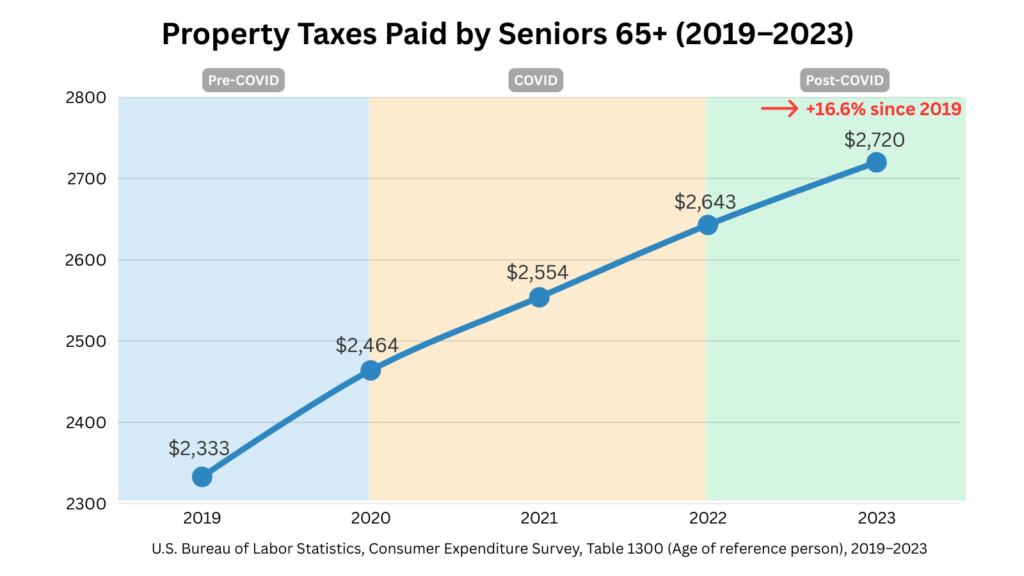
According to the BLS Consumer Expenditure Survey (Table 1300), seniors age 65 and older faced steady property tax expenses from 2019 through 2023, reflecting an ongoing cost of homeownership.
| 2019 | 2020 | 2021 | 2022 | 2023 |
| $2,333 | $2,464 | $2,554 | $2,643 | $2,720 |
Maintenance, Repairs, and Insurance Costs (2019–2023)
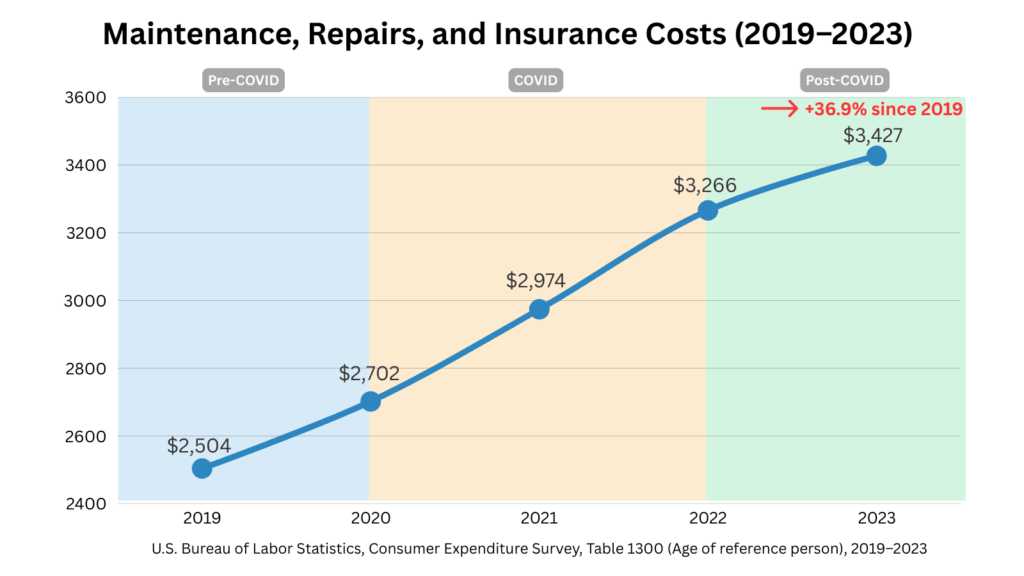
According to the BLS Consumer Expenditure Survey (Table 1300), seniors age 65 and over consistently spent on home maintenance, repairs, and insurance between 2019 and 2023, underscoring the ongoing costs of keeping a residence in good condition.
| 2019 | 2020 | 2021 | 2022 | 2023 |
| $2,504 | $2,702 | $2,974 | $3,266 | $3,427 |
Conclusion under Housing Costs Beyond Rent: Seniors with Owned Homes (Mortgages, Utilities, Property Taxes, and Maintenance)
Between 2019 and 2023, the total housing costs faced by senior homeowners rose nearly 28%, climbing from $6,235 to $7,953. Within that total, mortgage interest and charges fluctuated during COVID but ended up almost 30% higher than in 2019, while property taxes increased steadily by 16.6%.
The sharpest rise came from maintenance, repairs, and insurance, which jumped almost 37% over the same period—underscoring how the hidden costs of ownership weigh heavily on older adults.
At the same time, seniors’ incomes grew, with before-tax income rising about 15.6% and after-tax (disposable) income increasing 19.3%. Yet these gains still lagged behind the pace of rising housing costs. Whether paying rent or maintaining a home they own, older adults are seeing more of their limited income consumed by housing expenses, leaving less room for other essentials.
Housing Affordability for Older Adults
Housing affordability is best understood by comparing what seniors spend on housing with how much income they actually bring home.
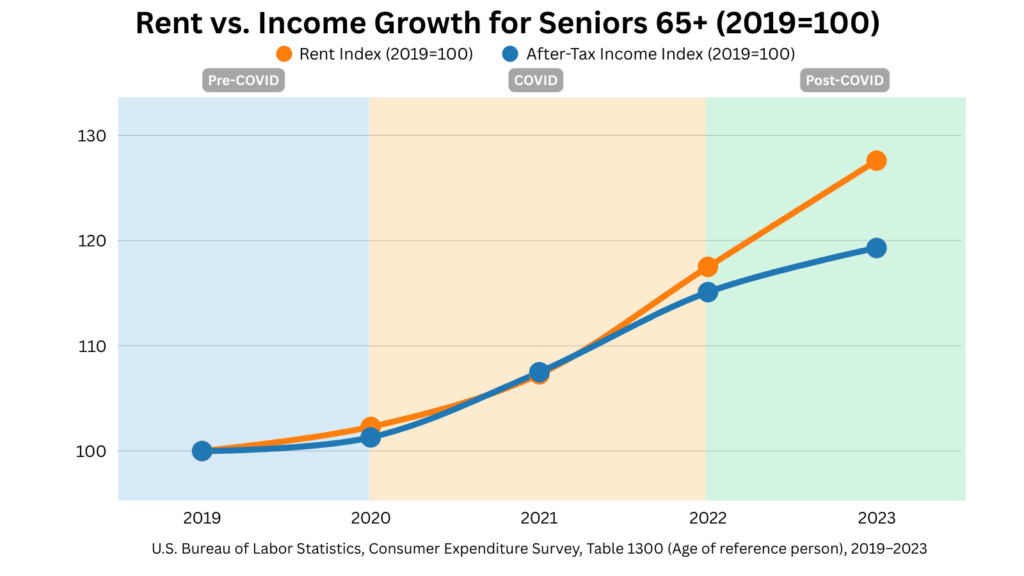
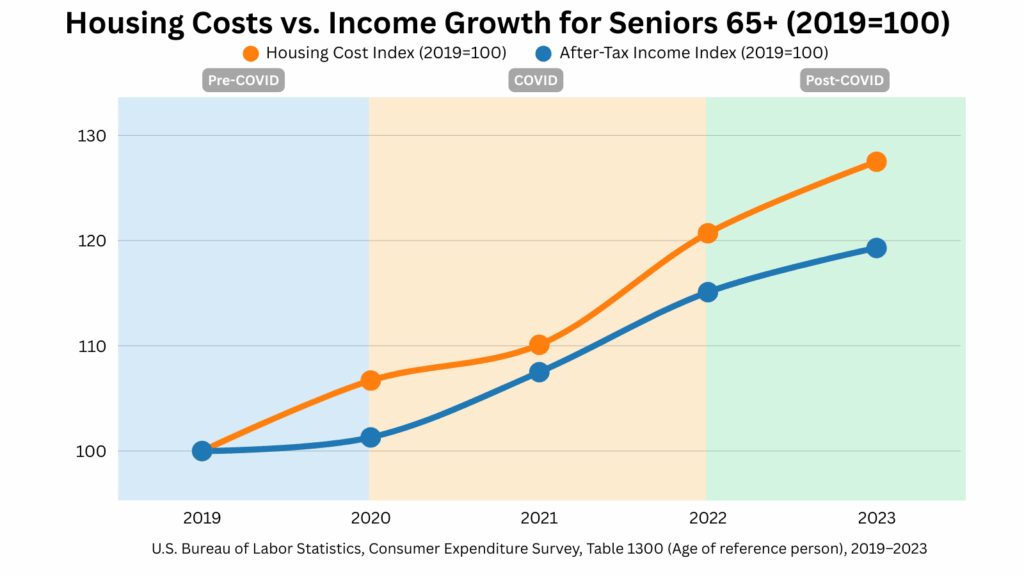
Looking at absolute dollars shows that rent and income operate on very different scales, but when we rebase both to a common starting point in 2019, a clear pattern emerges: rent costs for seniors have climbed more quickly than after-tax income. This widening gap highlights how affordability pressures have intensified for older adults in the years since COVID.
Measuring Housing Affordability
Housing affordability is commonly measured by comparing housing costs to household income. A widely used benchmark is the “30 percent rule”: if a household spends more than 30% of its income on housing, it is considered cost-burdened; spending more than 50% indicates severe cost burden.
This measure applies to both renters, whose main housing cost is monthly rent, and homeowners, who face property taxes, utilities, maintenance, and sometimes mortgage payments. For older adults, affordability is not only about whether they rent or own but about how much of their limited income must go toward keeping a roof over their heads.
Rent Burden for Seniors Age 65+ (2019–2023)
For seniors who rent, housing costs rose at a faster pace than income, creating a growing financial strain. Rent costs surged after the pandemic, climbing much faster than income. By 2023, the rent index was nearly ten points higher than seniors’ income index, showing how renting has become an increasing financial strain for older adults.
Housing Costs for Senior Homeowners (2019–2023)
Between 2019 and 2023, housing costs for senior homeowners rose steadily and outpaced after-tax income growth. While incomes did improve during the post-COVID recovery, the rise in housing expenses was faster, leaving many older homeowners with tighter budgets despite owning their homes.
COVID-19 and Housing Affordability
When COVID-19 hit, the impact went far beyond health—it also reshaped the financial realities of older Americans. For many seniors, housing costs that were once manageable began to rise at a faster pace than their incomes.
Renters, in particular, felt the squeeze as monthly payments climbed more steeply than after-tax income.
Even homeowners, while somewhat shielded, faced steady increases in housing expenses.
What began as a gradual trend before 2020 turned into a sharper financial strain during and after the pandemic, leaving more older adults worried about how to afford a safe and stable place to live.
For some, the stress of these financial pressures highlights the need for comforting escapes—like turning to uplifting senior short stories that offer a bit of relief and joy in uncertain times.
And for families actively looking for ways to support their aging loved ones, exploring senior citizen benefits by age can provide clarity on what programs and discounts are available to ease the burden.
Conclusion: What the Numbers Mean for Seniors 65+
From 2019 to 2023, the financial picture for Americans age 65 and over became more complicated. Rent costs rose nearly 28%, while homeowners faced steady increases in property taxes, maintenance, and insurance, with some still paying mortgage interest. After-tax income did grow by about 19%, but that gain was not enough to keep up with rising housing expenses.
COVID-19 shaped this story in lasting ways. Before the pandemic, income and housing costs were rising at a similar pace. During COVID, before-tax income dipped, while rent and ownership costs kept climbing. After the pandemic, housing costs accelerated even further, widening the gap between what seniors earn and what they must spend to keep a roof overhead.
The bottom line is clear: whether renting or owning, older adults are seeing more of their limited budgets consumed by housing. For many, this means less money available for food, healthcare, and other essentials. These trends highlight the growing need for policies, community support, and family planning to ensure that seniors can age with security and dignity in the years ahead.
FAQ: Rent, Income, and Housing Affordability for Older Adults
How much do seniors age 65+ spend on rent each year?
In 2023, seniors 65 and over spent about $3,280 annually on rent, up from $2,571 in 2019 — a 27.6% increase over five years.
Has senior income kept pace with rising housing costs?
Not fully. After-tax income rose 19.3% between 2019 and 2023, while rent and other housing costs grew faster, creating an affordability gap.
Do homeowners age 65+ also face high housing costs?
Yes. Even without rent, homeowners pay thousands in property taxes, utilities, maintenance, and sometimes mortgage interest. From 2019 to 2023, these costs rose nearly 28%.
What is considered “cost-burdened” housing for seniors?
A household is cost-burdened if housing takes more than 30% of income, and severely cost-burdened if it exceeds 50%. Many older adults approach or exceed these thresholds, especially in high-rent areas.
How did COVID-19 affect housing affordability for seniors?
During COVID, before-tax income dipped while housing costs continued rising. Post-COVID, rent and homeowner costs accelerated, widening the gap between income and housing expenses.
How do finances affect seniors beyond just rent and income?
Money shapes more than housing—it touches daily routines, relationships, and even how connected older adults feel. That’s why many seniors enjoy reading uplifting short stories that bring a sense of companionship and joy, reminding them that life is more than numbers.
Where can older adults find information about benefits and support programs?
Eligibility for benefits often depends on age, income, and location. Many seniors qualify for discounts, housing aid, or healthcare assistance without realizing it. To explore what age thresholds apply and what resources might be available, see our guide: At What Age Are You Considered a Senior Citizen?.