Healthcare is one of the biggest expenses for older adults. For Americans age 65 and over, understanding how much is spent each year on health insurance and prescription drugs—and how that compares with income and broader healthcare data—offers a clear picture of financial pressures in retirement.
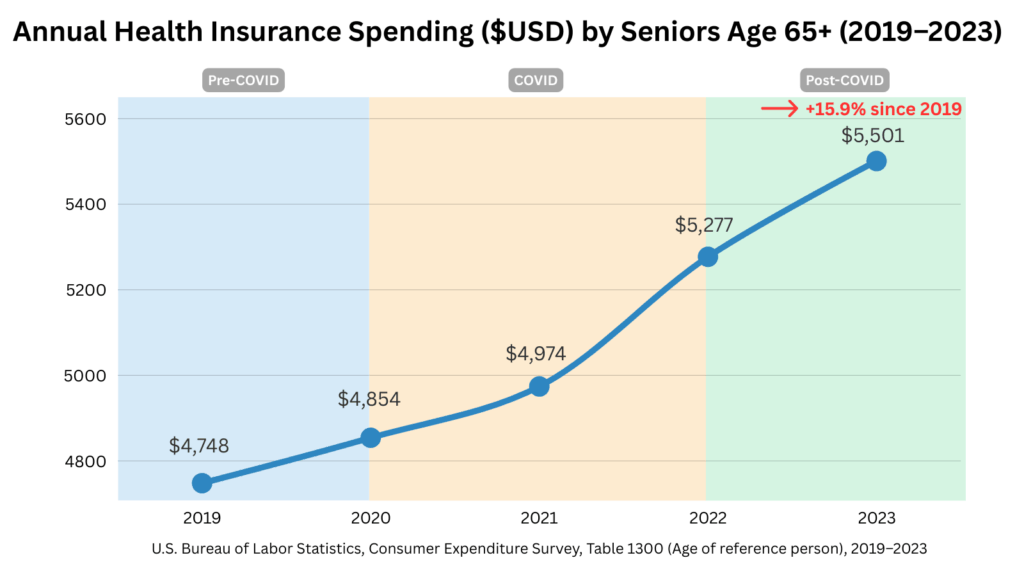
Annual Health Insurance Spending by Seniors Age 65+ (2019–2023)
According to the U.S. Bureau of Labor Statistics (BLS) Consumer Expenditure Survey, Table 1300 from 2019-2023.
| 2019 | 2020 | 2021 | 2022 | 2023 |
| $4,748 | $4,854 | $4,974 | $5,277 | $5,501 |
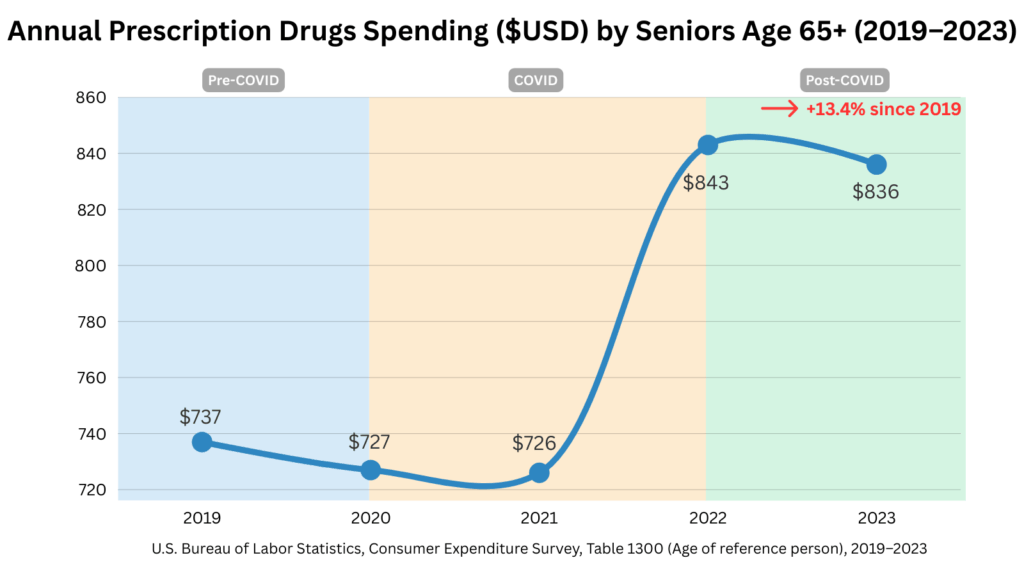
Annual Prescription Drugs Spending by Seniors Age 65+ (2019–2023)
According to the U.S. Bureau of Labor Statistics (BLS) Consumer Expenditure Survey, Table 1300 from 2019-2023, Annual Prescription Drugs Spending by Seniors Age 65+ (2019–2023)
| 2019 | 2020 | 2021 | 2022 | 2023 |
| $737 | $727 | $726 | $843 | $836 |
Earnings and Income Trends of Older Adults 65+ (2019–2023)
Understanding how much seniors earn is just as important as knowing what they spend. Data from the U.S. Bureau of Labor Statistics (BLS) Consumer Expenditure Survey shows that income levels for Americans age 65 and older shifted noticeably between 2019 and 2023.
Looking at both before-tax and after-tax income helps reveal whether older adults can keep up with rising healthcare costs—and if their financial resources are keeping pace with the growing burden of insurance premiums and prescription drugs.
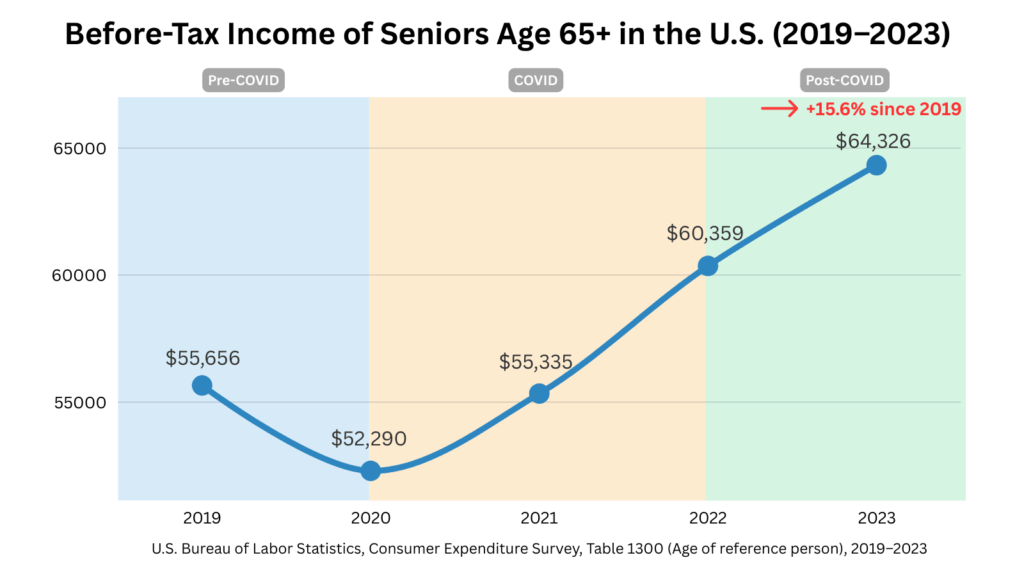
Income Before Taxes for Seniors 65+ (2019–2023)
According to BLS Consumer Expenditure Survey (Table 1300), the before-tax income of seniors age 65 and older showed noticeable fluctuations between 2019 and 2023.
| 2019 | 2020 | 2021 | 2022 | 2023 |
| $55,656 | $52,290 | $55,335 | $60,359 | $64,326 |
Income After Taxes for Seniors 65+ (2019–2023)
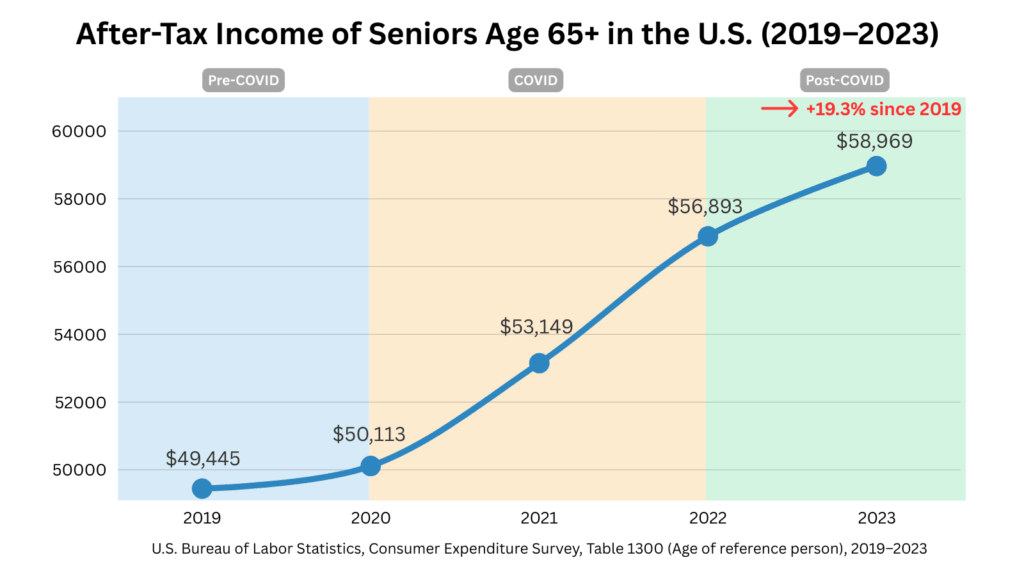
According to the BLS Consumer Expenditure Survey (Table 1300), the after-tax, or disposable, income of seniors age 65 and older rose steadily from 2019 to 2023.
| 2019 | 2020 | 2021 | 2022 | 2023 |
| $49,445 | $50,113 | $53,149 | $56,893 | $58,969 |
Key Takeaways on Senior Income (2019–2023)
From 2019 to 2023, seniors’ incomes rose on both a before-tax and after-tax basis. Before-tax income dipped during the COVID years—falling from $55,656 in 2019 to $52,290 in 2020—before recovering to $64,326 by 2023.
After-tax income, in contrast, followed a steady upward path, climbing from $49,445 in 2019 to $58,969 in 2023. This stability suggests that tax policies and relief measures helped cushion older adults during the pandemic.
Yet when compared with the growth in health insurance and prescription drug spending over the same period, the numbers reveal a similar pressure point: seniors’ healthcare costs are rising faster than their incomes.
Healthcare Costs Beyond: Medical Services & Supplies
Healthcare spending for seniors goes far beyond insurance premiums and prescription drugs. Older adults often face added costs such as copays for routine visits, out-of-pocket medical services, equipment, and ongoing treatments.
Unlike a set monthly premium, these expenses can be irregular and harder to anticipate—yet they accumulate quickly and place a significant strain on seniors’ budgets, shaping their overall financial security after age 65.
Total Healthcare Costs for Senior 65+ (2019–2023)
According to the BLS Consumer Expenditure Survey (Table 1300), Total annual healthcare expenses for seniors age 65 and older remained a major financial burden from 2019 through 2023. In fact, these costs were even higher than housing expenses over the same period, highlighting the outsized role of medical spending in retirement budgets (see our analysis in Rent and Housing Costs for Seniors 65+)
| 2019 | 2020 | 2021 | 2022 | 2023 |
| $6,833 | $6,668 | $7,030 | $7,540 | $8,027 |

Medical Services Costs (2019–2023)
According to the BLS Consumer Expenditure Survey (Table 1300), seniors age 65 and older spent a notable share of their healthcare budget on medical services between 2019 and 2023. These outlays included routine doctor visits, specialist care, and other essential treatments that formed a consistent part of overall healthcare spending.
| 2019 | 2020 | 2021 | 2022 | 2023 |
| $1,054 | $835 | $1,077 | $1,142 | $1,355 |

Medical Supplies Costs (2019–2023)
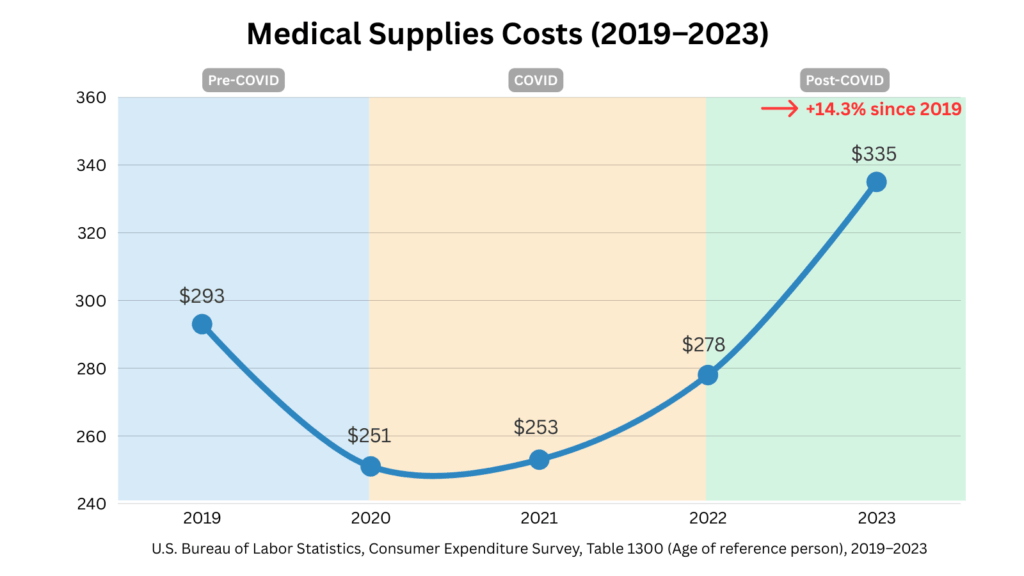
According to the BLS Consumer Expenditure Survey (Table 1300), seniors age 65 and older faced steady expenses for medical supplies from 2019 through 2023, reflecting an ongoing cost of maintaining their health needs.
| 2019 | 2020 | 2021 | 2022 | 2023 |
| $293 | $251 | $253 | $278 | $335 |
Conclusion under Healthcare Costs Beyond Insurance and Drugs: Medical Services & Supplies
From 2019 to 2023, seniors’ healthcare costs climbed steadily across every category: health insurance (+15.9%), prescription drugs (+13.4%), medical services (+28.6%), and medical supplies (+14.3%). In total, annual healthcare expenses rose 17.5% during this five-year period.
At the same time, income for older adults also grew, though at different rates. Before-tax income rose 15.6%, while after-tax (disposable) income increased 19.3%. This suggests that tax policy and relief measures during COVID may have supported household finances, softening some of the immediate shocks.
Yet even with rising incomes, the growth of healthcare costs—especially in services and supplies—remains a pressing affordability issue. Seniors’ budgets are being stretched not only by premiums and drugs, but also by the less predictable out-of-pocket expenses that now play an outsized role in retirement security.
Healthcare Affordability for Older Adults
From 2019 to 2023, seniors saw healthcare costs rise across insurance, prescription drugs, medical services, and supplies—adding up to a 17.5% increase in total spending. Over the same period, income kept pace or even grew faster, with after-tax income up 19.3% and before-tax income up 15.6%.
This means that while healthcare remains a significant and growing expense, older adults have been somewhat better able to absorb it compared with housing costs, where spending growth has far outstripped income gains.
Measuring Healthcare Affordability
Healthcare affordability is often gauged by comparing medical costs to household income. Instead of the “30 percent rule” used in housing, researchers typically look at the share of income devoted to insurance premiums, prescription drugs, medical services, and out-of-pocket supplies. When these expenses consume a large portion of income, seniors are considered financially burdened, with higher levels indicating severe strain.
For older adults, affordability goes beyond whether they are covered by Medicare or private insurance—it comes down to how much of their limited income must be devoted to staying healthy, managing chronic conditions, and maintaining access to essential care.
Health Insurance Burden for Seniors Age 65+ (2019–2023)
Between 2019 and 2023, health insurance costs for seniors rose 15.9%, climbing from $4,748 to $5,501. Over the same period, before-tax income for adults age 65+ increased 15.6%, while after-tax income grew even faster at 19.3%.
This means that, unlike renting, where costs outpaced income growth, health insurance premiums generally stayed in line with seniors’ rising incomes. While premiums remain a sizable and unavoidable expense, the affordability gap has not widened in the same way as rent, giving older adults slightly more financial breathing room when it comes to healthcare coverage.

Prescription Drug Burden for Seniors Age 65+ (2019–2023)
Between 2019 and 2023, prescription drug spending among seniors rose by 13.4%, moving from $737 to $836. The sharpest increase came in 2022, when annual costs jumped to $843 before easing slightly the following year.
By comparison, seniors’ incomes grew at a faster pace during the same period—after-tax income rose 19.3%. This means that while prescription drugs remain a meaningful and sometimes unpredictable expense, income growth outpaced drug spending overall, leaving older adults somewhat better positioned to absorb these costs than they are with housing.

COVID-19 and Healthcare Affordability
When COVID-19 hit, the impact went beyond health itself—it also reshaped the financial picture for older Americans. For many seniors, healthcare costs that had been relatively stable began to climb more quickly, especially in insurance premiums, prescription drugs, and medical services.
Prescription drug spending spiked sharply in 2022, while insurance costs rose steadily year after year. At the same time, seniors’ incomes also recovered and grew—after-tax income rose 19.3% from 2019 to 2023, slightly outpacing the 17.5% increase in total healthcare spending.
This meant that, unlike housing where costs ran far ahead of income, the affordability gap in healthcare remained more balanced. Still, for many older adults on fixed budgets, the steady rise in out-of-pocket expenses created new worries about how to cover ongoing medical needs.
For some, these financial pressures underscore the value of simple sources of comfort—like turning to heartwarming senior short stories that provide moments of relief and joy in uncertain times. And for families seeking ways to ease the strain, exploring senior citizen benefits by age can shed light on available programs and discounts that help make healthcare more manageable.
Conclusion: Key Insights for Seniors 65+
From 2019 to 2023, healthcare became a steadily rising expense for older Americans. Health insurance costs grew nearly 16%, prescription drugs rose 13%, medical services surged almost 29%, and medical supplies climbed 14%. Altogether, total healthcare spending increased 17.5% in just five years.
Incomes did improve during this same period—after-tax income grew by 19.3% and before-tax income by 15.6%—meaning that, unlike housing, income growth generally kept pace with medical costs. Still, the sharp spikes in specific areas such as prescription drugs in 2022 and ongoing growth in medical services left many seniors feeling financial pressure, especially those on fixed budgets.
COVID-19 shaped this picture in lasting ways. Before the pandemic, income and healthcare spending rose gradually together. During COVID, prescription drug costs stayed low, but medical services and insurance premiums began to climb. In the post-COVID years, costs accelerated, even as incomes recovered, creating a persistent affordability challenge.
The bottom line is clear: while incomes have helped offset part of the rise, seniors are still seeing more of their limited resources pulled into healthcare. For many, this means tough trade-offs with other essentials—or a growing reliance on programs, family support, and policy measures to make sure older adults can age with security and dignity.
FAQ: Health Insurance, Drug Costs, and Affordability for Seniors
At what age do seniors qualify for Medicare?
Most Americans become eligible for Medicare at age 65, though some may qualify earlier due to disability or certain medical conditions. If you’d like to explore other benefits available to older adults, see our guide: Discover When Are You Considered a Senior Citizen? Age Guidelines, Definitions, and Benefits.
How much do seniors spend on health insurance each year?
According to the U.S. Bureau of Labor Statistics, seniors age 65+ spent about $5,501 on health insurance in 2023, up nearly 16% since 2019.
Are prescription drug costs rising faster than income for seniors?
No. Prescription drug costs rose about 13% between 2019 and 2023, while after-tax income grew more than 19%, giving seniors slightly more room to cover medication expenses.
What are out-of-pocket healthcare expenses beyond insurance?
In addition to premiums and drugs, seniors also pay for medical services (doctor visits, specialists, procedures) and supplies (equipment, daily medical needs), which together add up to thousands of dollars annually.
How do finances affect seniors beyond just healthcare costs?
Money shapes far more than medical bills—it influences daily routines, stress levels, and even how confident older adults feel about their independence. Rising expenses for insurance, prescription drugs, and medical services can add financial strain, but they don’t define the whole of senior life. Many older adults find comfort in small joys—like reading heartwarming short stories—that provide companionship and remind them life is more than numbers on a bill.