Phone services account for a steady share of senior household budgets. From cellular plans to landlines and VOIP, the latest data shows how Americans 65+ spend on staying connected—and what that means for affordability.
On average, seniors spend over $1,000 a year on phone services—making communication one of the most consistent, if overlooked, costs of aging.
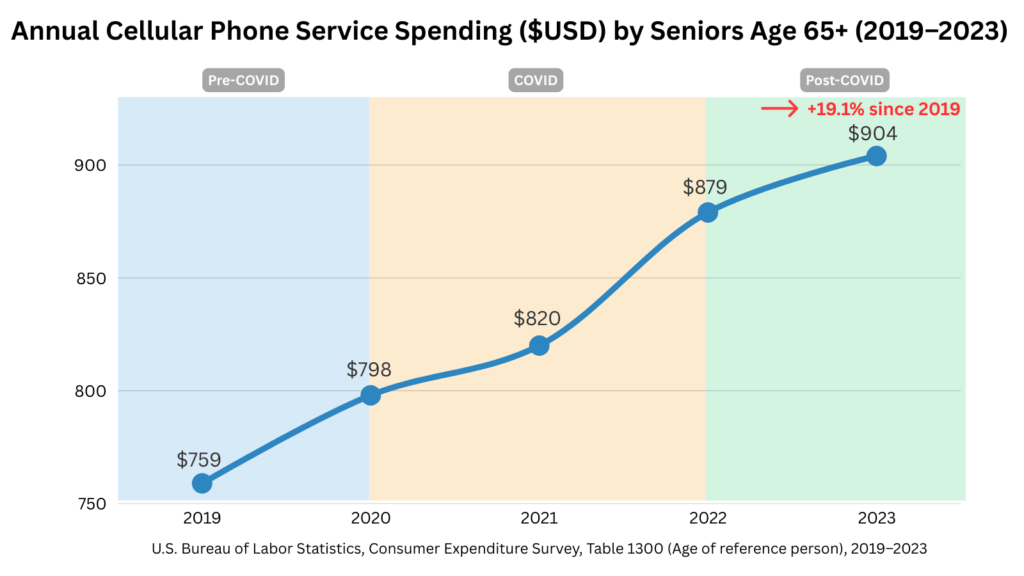
Annual Cellular Phone Service Spending by Seniors Age 65+ (2019–2023)
According to the U.S. Bureau of Labor Statistics (BLS) Consumer Expenditure Survey, Table 1300 from 2019-2023.
| 2019 | 2020 | 2021 | 2022 | 2023 |
| $759 | $798 | $820 | $879 | $904 |
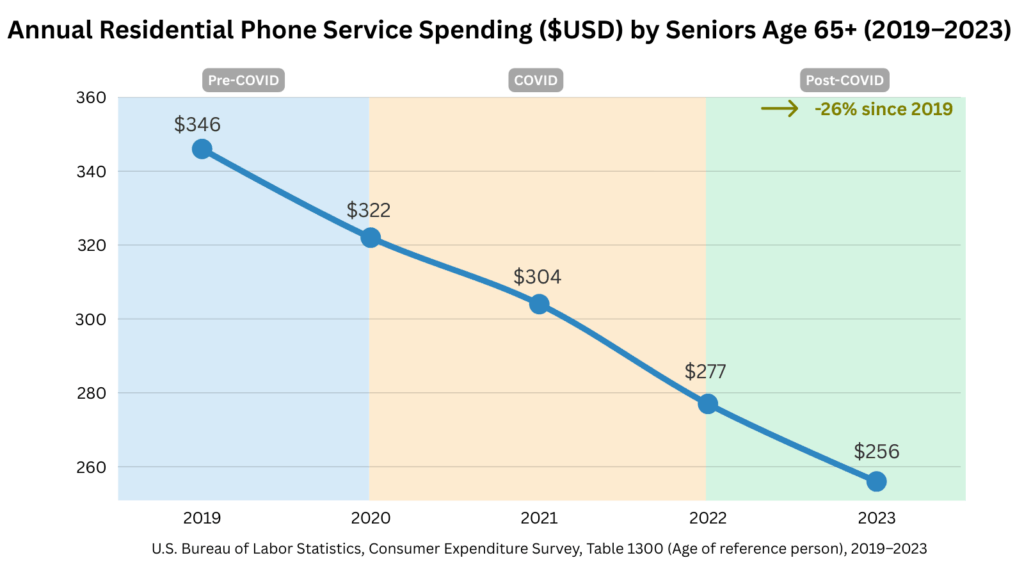
Annual Residential Phone Service Spending by Seniors Age 65+ (2019–2023)
According to the U.S. Bureau of Labor Statistics (BLS) Consumer Expenditure Survey, Table 1300 from 2019-2023, Annual Residential Phone Service Spending by Seniors Age 65+ (2019–2023)
| 2019 | 2020 | 2021 | 2022 | 2023 |
| $346 | $322 | $304 | $277 | $256 |
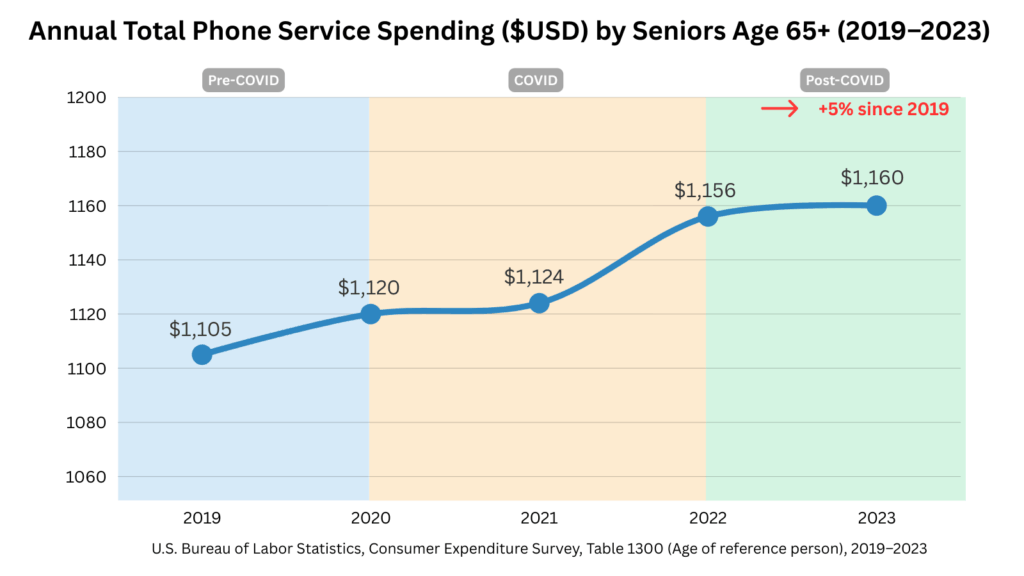
Annual Total Phone Service Spending by Seniors Age 65+ (2019–2023)
According to the U.S. Bureau of Labor Statistics (BLS) Consumer Expenditure Survey, Table 1300 from 2019-2023, Annual Total Phone Service Spending by Seniors Age 65+ (2019–2023)
| 2019 | 2020 | 2021 | 2022 | 2023 |
| $1,105 | $1,120 | $1,124 | $1,156 | $1,160 |
How Earnings and Income Have Shifted for Older Adults 65+ (2019–2023)
Knowing how much seniors earn is just as important as tracking their expenses. Data from the U.S. Bureau of Labor Statistics (BLS) Consumer Expenditure Survey indicates that income levels for Americans age 65 and older shifted significantly between 2019 and 2023.
Looking at both cellular and residential phone spending helps reveal how older adults are adapting to changing communication needs—and whether their budgets can keep pace with the growing reliance on mobile plans and digital connectivity.
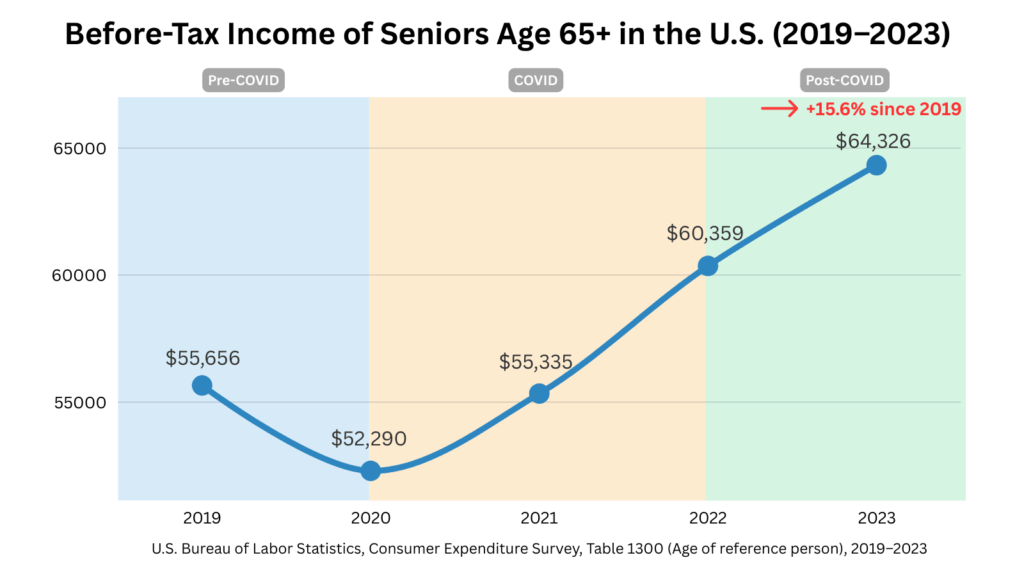
Trends in Seniors’ Pre-Tax Income (2019–2023)
According to BLS Consumer Expenditure Survey (Table 1300), the Trends in Seniors’ Pre-Tax Income showed noticeable fluctuations between 2019 and 2023.
| 2019 | 2020 | 2021 | 2022 | 2023 |
| $55,656 | $52,290 | $55,335 | $60,359 | $64,326 |
Trends in Seniors’ Post-Tax Income (2019–2023)
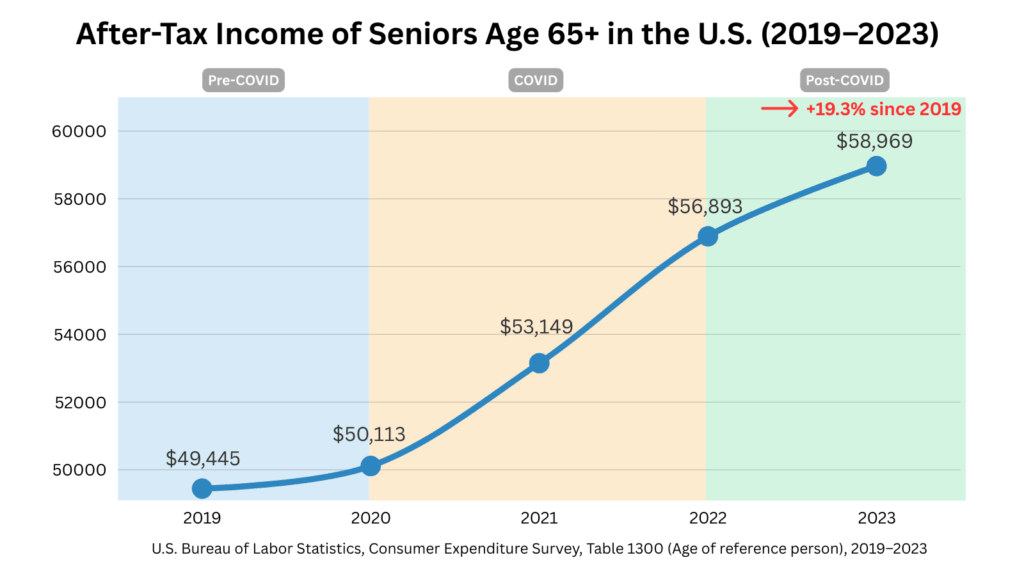
According to the BLS Consumer Expenditure Survey (Table 1300), the post-tax, or disposable, income of seniors rose steadily from 2019 to 2023.
| 2019 | 2020 | 2021 | 2022 | 2023 |
| $49,445 | $50,113 | $53,149 | $56,893 | $58,969 |
What the Data Shows About Senior Income (2019–2023)
Between 2019 and 2023, seniors experienced gains in both pre-tax and post-tax income. Pre-tax earnings dropped in the early COVID years—sliding from $55,656 in 2019 to $52,290 in 2020—yet by 2023 had rebounded to $64,326.
After-tax income showed a different pattern, moving upward each year without interruption, rising from $49,445 in 2019 to $58,969 in 2023. This steady climb points to the role of tax policy and pandemic relief in softening the financial shock for older adults.
Yet when compared with the rapid shift from landlines to mobile plans, the numbers point to a different kind of pressure: seniors’ phone service costs are steadily rising as reliance on cellular connectivity grows.
Phone Service Affordability for Seniors
From 2019 to 2023, seniors’ spending on phone services shifted notably—cellular costs climbed while residential landline use continued to decline. In total, phone service spending rose by about 5% over this period.
Compared with other essentials, this increase has been relatively limited: healthcare expenses grew more sharply, and housing costs rose at an even faster pace, far outstripping seniors’ income gains.
Measuring Phone Service Affordability
Phone service affordability is often assessed by looking at how much of a household’s income goes toward staying connected. Unlike housing, where the “30 percent rule” is common, researchers instead examine the share of income seniors spend on cellular plans, residential landlines, VOIP, and calling cards. When these costs take up a large slice of income, older adults can be considered financially burdened, with higher shares signaling greater strain.
For seniors, affordability is not just about whether they have access to a phone line—it’s about how much of their limited income must be devoted to maintaining contact with family, managing essential services, and participating in an increasingly digital world.
Cellular Phone Spending and Affordability for Seniors 65+
(2019–2023)
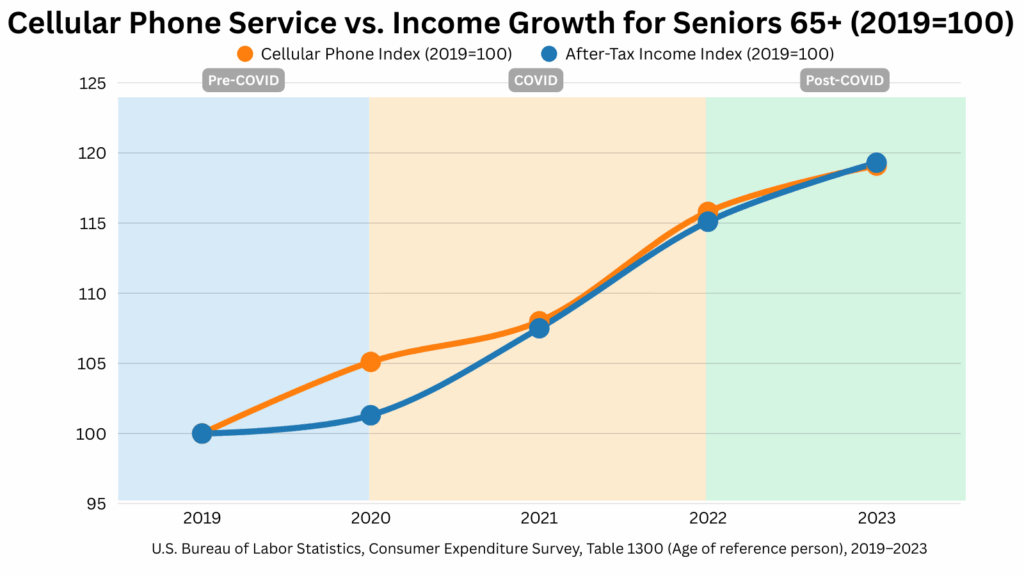
Between 2019 and 2023, seniors’ spending on cellular phone service rose 19.1%, increasing from $759 to $904 a year. Over the same period, disposable income rose even faster at 19.3%.
This means that cellular costs, unlike housing which has far outpaced income growth, have largely kept pace with what older adults earn. Staying connected by mobile phone remains an essential and recurring expense, but it has not created the same affordability gap seen in healthcare or rent.
Declining Residential Phone Spending Among Seniors 65+
(2019–2023)
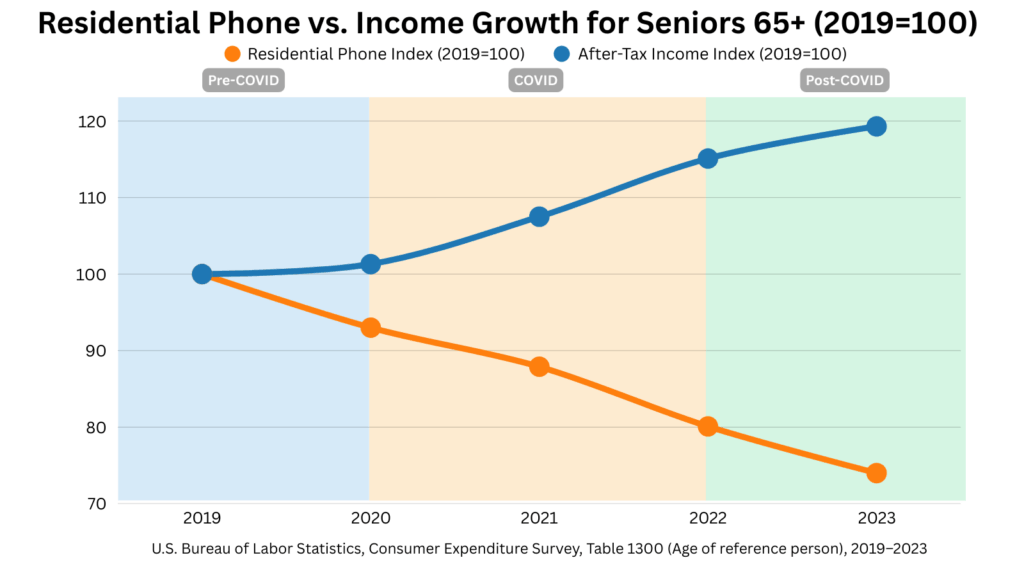
Between 2019 and 2023, seniors’ spending on residential phone service fell by 26%, dropping from $346 to $256 a year. The steepest decline came after 2021, as more older adults shifted away from landlines toward mobile plans.
During the same period, after-tax income for adults age 65+ rose 19.3%. This contrast highlights how traditional landline costs are becoming a smaller share of seniors’ household budgets. While residential service remains essential for some—particularly the oldest or those in rural areas—the overall trend shows older adults reducing this expense even as their incomes have grown.
COVID-19 and Phone Service Affordability
When COVID-19 hit, the effects reached beyond health—it also reshaped how older Americans spent on phone services. For many seniors, the shift was clear: cellular phone service costs rose steadily, while residential landline spending declined year after year.
Cellular spending climbed 19.1% from 2019 to 2023, moving from $759 to $904 annually as smartphones and mobile plans became more central to daily life. In contrast, residential phone service dropped by 26% over the same period, falling from $346 to $256, as fewer older adults relied on landlines or calling cards.
At the same time, seniors’ after-tax income grew 19.3%. This meant that mobile costs largely kept pace with income growth, while declining landline spending reduced the overall share of budgets devoted to phone services.
Unlike housing, where expenses surged well ahead of income, phone services showed a more balanced picture. Still, the rising reliance on mobile connectivity highlights both the growing importance—and the unavoidable cost—of staying connected in later life.
For families looking to ease these financial pressures, exploring senior citizen benefits by age can reveal programs and discounts that help older adults stay connected more affordably.
Conclusion: Key Takeaways for Seniors 65+
From 2019 to 2023, phone service costs for older Americans followed two very different paths. Cellular spending rose 19.1%, climbing from $759 to $904 a year, as mobile plans became central to staying connected. By contrast, residential phone service dropped 26%, falling from $346 to $256, as more seniors moved away from landlines and calling cards. Taken together, total phone service spending increased only about 5% in five years.
Incomes improved during the same period—after-tax income grew by 19.3% and before-tax income by 15.6%—meaning that unlike housing, where costs far outpaced income, overall phone service expenses remained largely in line with what seniors could afford. The shift was less about growing financial strain and more about changing communication habits: higher mobile costs offset by declining landline use.
COVID-19 shaped this story too. Before the pandemic, both mobile and residential costs moved gradually. During COVID, reliance on mobile phones increased, while landline use continued to fall. In the post-COVID years, cellular costs accelerated as digital connectivity became even more essential, leaving traditional phone service with a shrinking role in seniors’ budgets.
The bottom line is clear: while incomes have kept pace with phone service spending, seniors are devoting a greater share of their communication budgets to mobile connectivity. For many, this reflects a lasting shift in how older adults stay connected—with affordability tied less to overall cost burdens, and more to ensuring reliable access to the digital tools and services that now define everyday life.
FAQ: Phone Service Costs and Affordability for Seniors
How much do seniors spend on phone services each year?
On average, older adults spend just over $1,100 annually on combined phone services, with cellular costs rising and residential landline use steadily declining.
Why are more seniors switching from landlines to mobile phones?
Many older adults find that mobile phones offer easier access to family, healthcare providers, and digital tools, making them more practical than traditional landlines.
Do rising phone costs make it harder for seniors to afford other essentials?
Compared with housing expenses, phone service costs have grown more slowly. Still, for seniors on fixed incomes, even modest increases in cellular bills can feel significant.
How can staying connected help seniors feel less isolated?
Reliable phone service is one way older adults stay engaged with family and friends. For more day-to-day comfort, some also enjoy heartwarming short stories for seniors that bring companionship and joy.
Are there programs that help seniors save money on phone service?
Yes. Depending on income and age, older adults may qualify for discounts through programs like Lifeline or Affordable Connectivity. To explore broader benefits, see our guide on senior citizen age and eligibility for assistance.